Newborn Sleepy Cues vs. Overtired Cues
Crying is a late signal. Earlier, newborns give small hints that they are getting tired, and catching them can make settling smoother. Nobody catches every cue, and if you miss one you have not failed. This guide lists early sleepy cues and late overtired cues side by side, explains what to do for each, and shows how to tell tired from hungry so you can respond to what your baby actually needs.
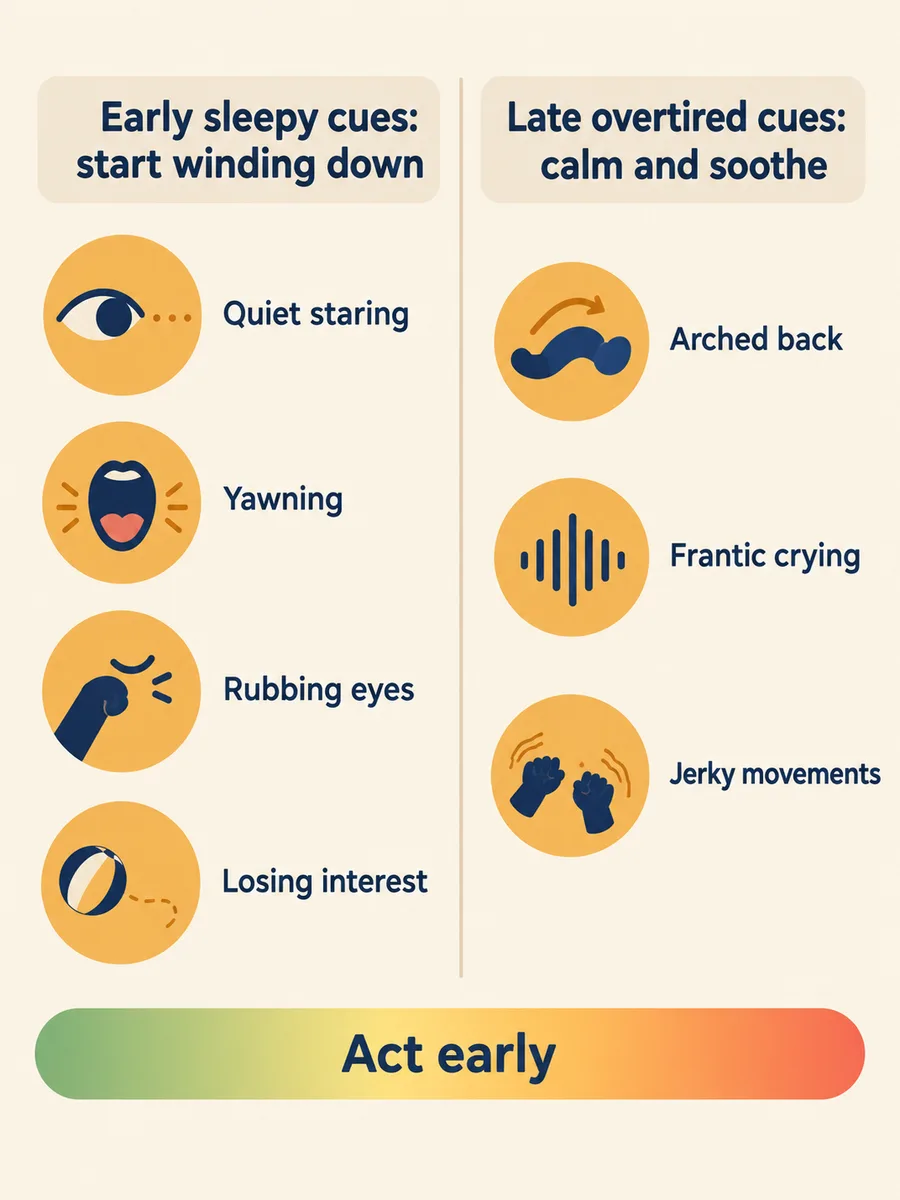
Early sleepy cues vs. late overtired cues
| Early sleepy cues (start winding down) | Late / overtired cues (calm and soothe) |
|---|---|
| Quieting down, staring off | Arching back, stiff body |
| Yawning | Frantic crying, hard to console |
| Reddening around eyebrows or eyelids | Jerky, uncoordinated movements |
| Losing interest in toys or faces | Turning away from everything |
| Slower, floppier movements | Second wind: suddenly very alert, then meltdown |
| Sucking on fingers or fists | Refusing feeds, pulling off the breast or bottle |
| Mild fussing that builds | Rubbing eyes and face, clenched fists |
Quick rule: if you see two cues in a row, start your wind-down. Do not wait for the crying.
Not every baby yawns
Some babies barely yawn. Many show a glassy stare, a quieter mood or red eyebrows instead. In the first weeks the best cue is often the combination of your baby's expression and the time since they woke. Look at the face for ten seconds at each wake-up for a few days and jot down what the eyes, hands and brow do just before sleep. Most parents learn their baby's unique signal within about a week.
What to do when you catch an early cue
- Move to a dim, quiet room.
- Do a short wind-down: a feed or cuddle, a swaddle if appropriate, a soft song or shush.
- Lay baby down on their back when drowsy or asleep.
The routine can be this short. A longer one is not needed at this age. See the newborn bedtime routine for a few simple steps.
What to do when baby is already overtired
- Lower stimulation. Dim lights, quieter voice, fewer people.
- Hold baby close. Skin to skin if you like, with slow swaying.
- Try the soothing toolkit. Swaddle if appropriate, white noise at a low volume, gentle motion, a pacifier. It may take 15 to 30 minutes.
- Do not worry about doing it "wrong." Overtired babies simply need more help settling.
An overtired baby often struggles to be put down. If your baby only settles in your arms, that is common. See newborn won't sleep unless held.
Tired or hungry?
A cranky baby is not always tired. Hunger looks different:
- Rooting
- Lip smacking
- Hands to mouth
- Turning toward touch
If you see those, feed first and then think about sleep. Crying is a late hunger sign too. Other things to rule out before assuming tired: a wet or dirty diaper, gas, overstimulation, temperature, or simply wanting to be held.
Why babies look "wired" in the evening
Overtired babies sometimes look energetic and fussy. This is common in the evening. Start winding down a bit earlier and keep the evening calm. Many babies have a fussy period in the late afternoon or evening that peaks around 6 weeks and eases by about 3 to 4 months. See newborn growth spurts and fussy weeks.
Cues plus the clock
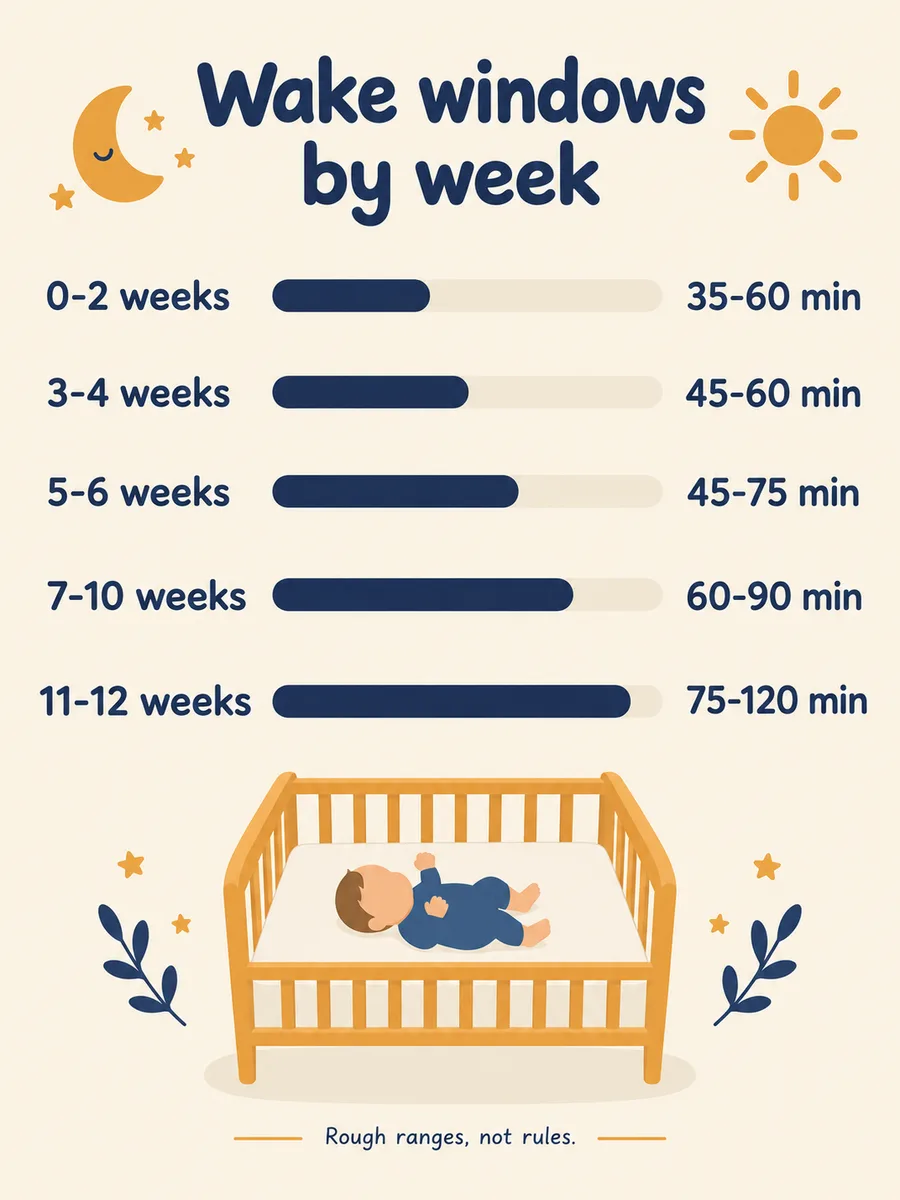
Cues are the main signal, and the wake window is a backup. A few minutes before the end of the typical window for your baby's age, start looking for the early cues. If the clock says "not yet" but your baby is showing cues, start the wind-down. If the clock says "time" but your baby is happily playing, give it a few minutes. See newborn wake windows by week for commonly cited ranges.
A one-week practice plan
- Day 1. Look at your baby's face for ten seconds at each wake-up.
- Day 2. Write down the first cue you see before each sleep.
- Day 3. Compare your notes to the clock since the last wake-up.
- Day 4. Start the wind-down at the first cue and note how settling goes.
- Day 5. Try the same short routine in the same order.
- Day 6. Notice which late cues show up when you miss the window and what helped.
- Day 7. Review and keep what helped.
When you miss the window
You will miss it sometimes. A baby who gets overtired does not need a perfect fix, only extra help: a dark, quiet room, a close hold and time. Aim to catch the early cues a little sooner next time, and let go of the rest.
Safe sleep reminder
However tired baby is, every sleep goes on the back, on a firm, flat surface with nothing else in it. If baby falls asleep in a carrier, car seat or swing, move them to a flat surface when you can. If you are the one who is overtired, put baby down safely, step away for a few minutes and ask for help.
When fussiness is more than tiredness
Call your pediatrician if crying is high-pitched, weak or sounds different, if baby is hard to wake, feeds poorly, has fewer wet diapers than expected, has labored breathing or has a fever of 100.4°F (38°C) or higher. Trust your instincts.
Printable cue page
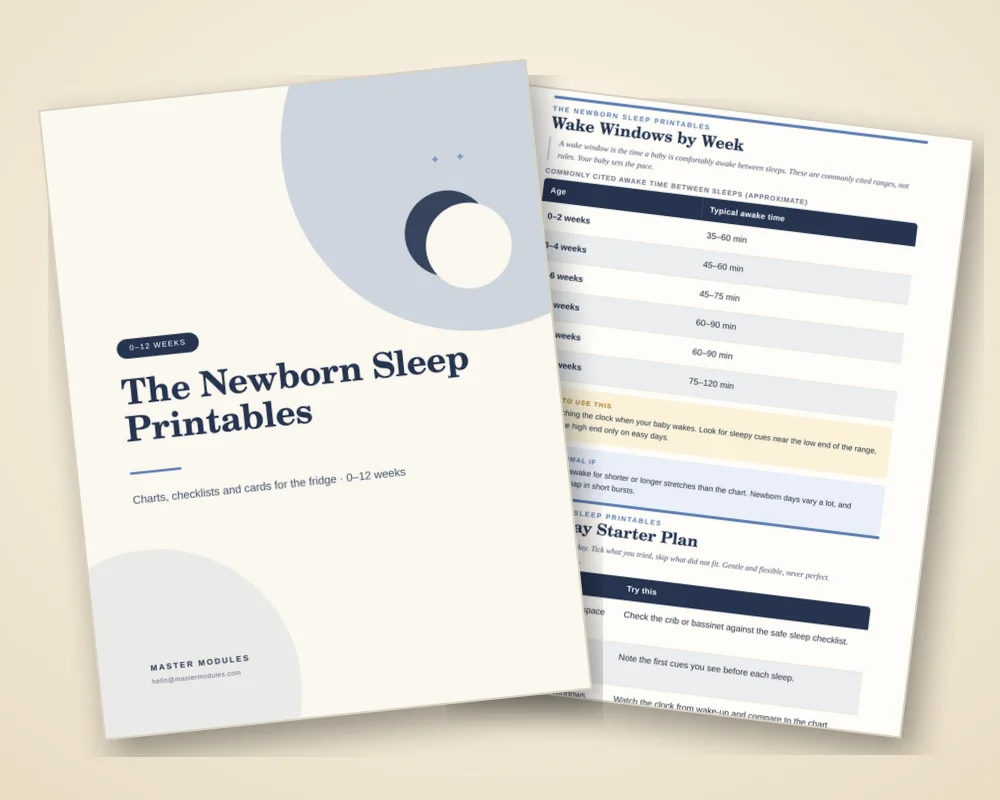
The Newborn Sleep Playbook includes a chapter on sleepy cues vs. overtired cues and a one-page version for the fridge so every caregiver can use the same list. It is educational and does not replace your pediatrician's advice.