White Noise for Newborns: Safe Volume, Distance and Timing
White noise can help calm a newborn, and the safety rules are simple: keep the volume low (about 50 decibels or less, roughly conversation level), place the machine across the room instead of in or near the crib, and consider a timer. The American Academy of Pediatrics (AAP) advises keeping infant sound machines quiet and at a distance. This guide explains why, what to try and how to check your setup.
Why white noise calms some newborns
Babies spend months in the womb, which is quite loud. Shushing, humming and steady low sound can remind them of that. A steady low sound can also mask household noise, so a cough or a door does not wake them. It works for many babies, not all. Treat it as one tool in the soothing toolkit, alongside holding, motion, sucking and a snug swaddle.
Safe use: volume, distance and time
- Volume. Keep it at or below conversation level, roughly 50 decibels or less. That is about the level of a quiet conversation or a quiet shower. A 2014 review of infant sound machines found some could produce levels above recommended limits at maximum volume. A free decibel meter app on your phone can check.
- Distance. Place the machine as far from the crib as the room allows. At least 7 feet (2 meters) is commonly suggested.
- Position. Never in the crib, never attached to it, and never on a shelf above baby's head.
- Duration. Consider a timer, or running it only for part of the night, if you can.
- Cords. Keep the cord out of baby's reach.
If you are not sure, turn it down. A lower volume that still covers sudden noises is enough.
Which sound to use
| Sound | What it is like | Notes |
|---|---|---|
| White noise | Even static, like a fan | The most common choice |
| Pink noise | Softer, lower than white | Some people find it gentler |
| Brown noise | Deep, rumbling | Some babies like it. Keep it low |
| Shush | A human "shhh" | Free, always with you, easy to do from the side of the crib |
There is no proven best type. Try one at a time for a few nights and keep what works.
How to set it up tonight
- Put the machine at the far side of the room, not on the crib or the changing table next to it.
- Start at a low volume. If you can hear it clearly from the crib, turn it down.
- Check the level with a decibel meter app if you are unsure.
- Set a timer if your machine has one.
- Check the cord is out of reach.
- Keep it the same each night. A consistent sound can become part of the routine. See newborn bedtime routine.
When to skip it
- If your baby seems more wound up with sound, skip it.
- If your pediatrician recommends otherwise, follow their advice.
- If you are using it to cover a noisy home all night, ask whether a timer or earplugs for the adults is a better fix.
If you are worried about your baby's hearing, ask your pediatrician.
White noise does not change safe sleep
A sound machine is a comfort tool. Every sleep still needs baby on their back, on a firm, flat surface with nothing else in it, in your room. Do not use sound as a reason to put baby in a seat, swing or inclined product. See the safe sleep nursery setup. Also note that you should not rely on monitors or gadgets that claim to reduce SIDS risk.
Combining sound with other soothing tools
Many parents combine shushing with holding, a swaddle, swaying and sucking. Only use side or stomach position while holding baby awake. Always lay baby on the back for sleep. If you swaddle, follow the safe-swaddle rules. See how to swaddle a newborn safely.
Sound and a baby who only sleeps held
Sound alone will not fix a baby who wants contact, but it often helps with the transfer to the crib. Some parents start the sound before they lay baby down. See also the calming ladder in the Playbook.
Common mistakes to avoid
- Turning the volume up to "beat" a crying baby. If baby is crying, soothe the baby first, then check the volume.
- Placing the machine on the crib rail or the mattress for convenience.
- Leaving it on at the highest setting overnight.
- Letting sound replace the rest of the routine. Dim lights, a feed and a calm voice do a lot of the work.
- Using sound for long stretches during the day, when your baby might benefit from normal household noise to learn the difference between day and night.
A phone alternative
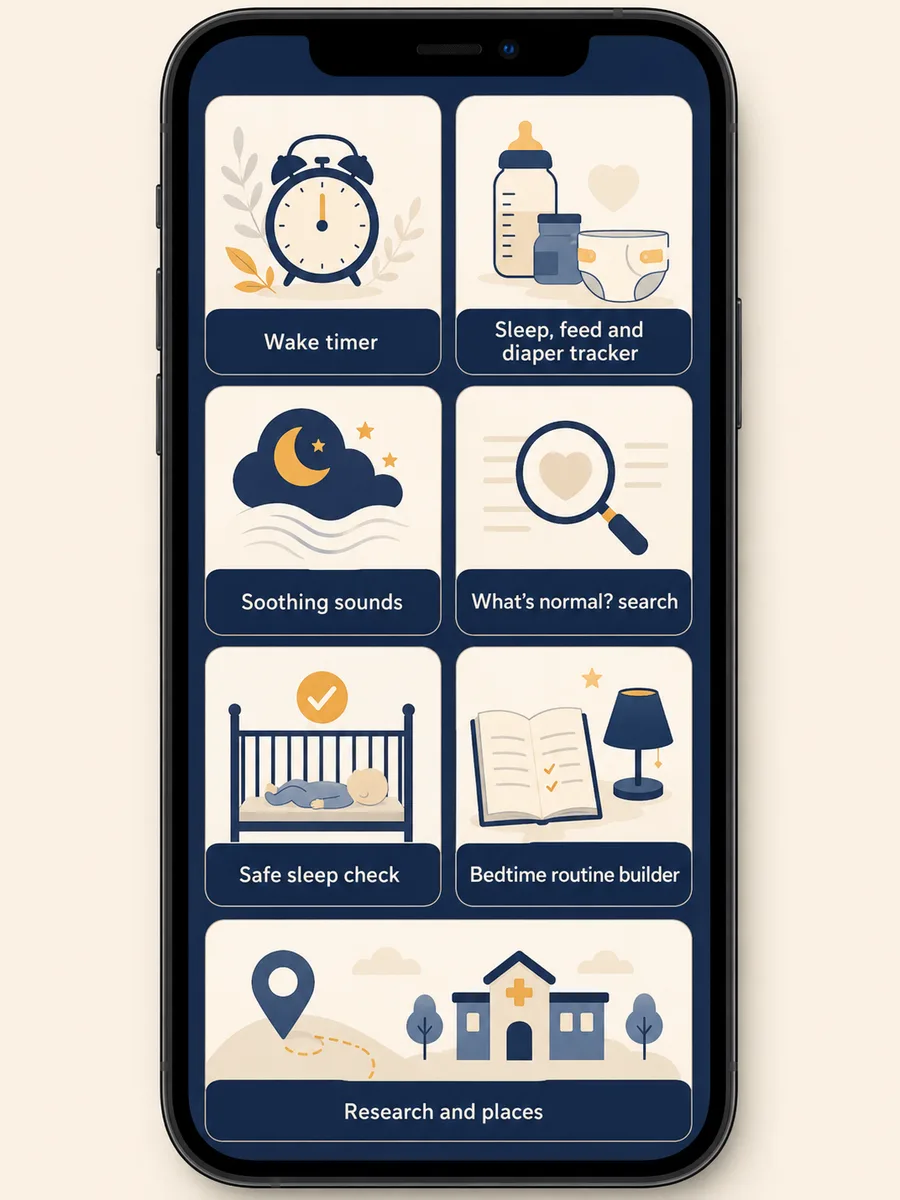
A phone with an app can play steady sound, but a dedicated machine avoids screens and notifications. Whatever you use, keep it across the room and low. The web app that comes with The Newborn Sleep Playbook generates white, pink and brown noise and a shush on your device, works offline, shows a warning if the volume goes up, and includes a timer from 15 minutes to 2 hours.
Questions parents ask
Will my baby become dependent on white noise? Some babies come to link sound with sleep. If you want to phase it out later, lower the volume a little each week. There is no need to change anything in the newborn months if it is working and safe.
Can I use a fan instead? A fan makes steady noise, but keep any appliance and cord out of reach and follow the maker's instructions. The same volume and distance guidance applies.
What about sounds from a stuffed toy with a speaker? Soft toys do not belong in the sleep space. Keep sound sources across the room.
Keep in mind
This page is educational and does not replace your pediatrician's advice. If baby seems unwell, call your pediatrician or 911.