Newborn Checklist: Your First Two Weeks at Home
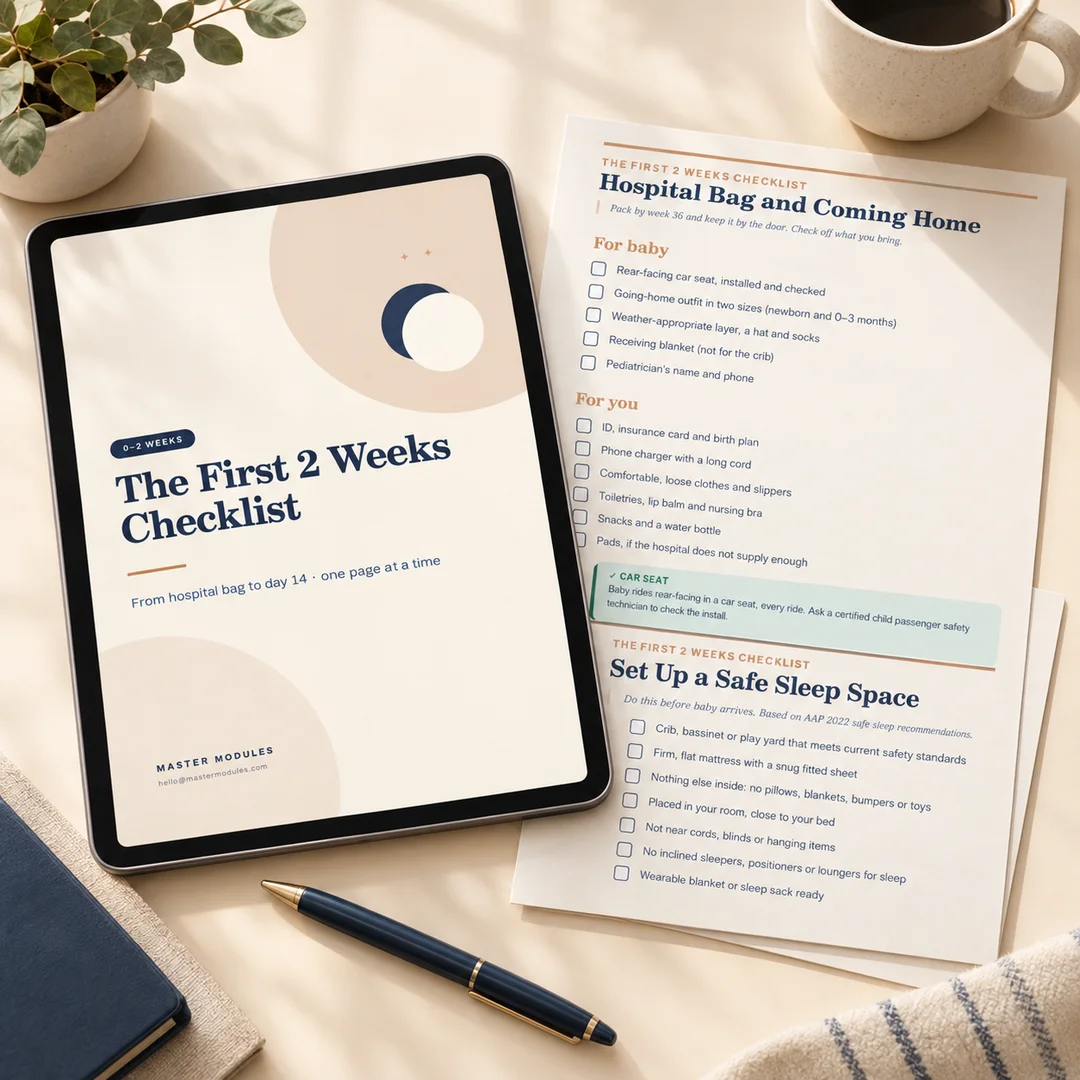
The first two weeks with a newborn are mostly about three things: a safe sleep space, feeding and diapers, and looking after the person recovering. Everything else can wait. This checklist walks through the first 14 days one small list at a time. Skip what does not fit your family, and take what helps. It is educational and does not replace your pediatrician's advice, so ask them about your baby's feeding, weight checks and visit schedule.
Before you leave the hospital
For baby
- Rear-facing car seat, installed and checked
- Going-home outfit in two sizes (newborn and 0 to 3 months)
- A weather-appropriate layer, hat and socks
- Pediatrician's name and phone number
For you
- ID, insurance card and birth plan
- Phone charger with a long cord
- Comfortable, loose clothes and slippers
- Snacks and a water bottle
Baby rides rear-facing in a car seat for every ride. Ask a certified child passenger safety technician to check the install.
Set up a safe sleep space
Do this before baby arrives. Based on the AAP 2022 safe sleep recommendations.
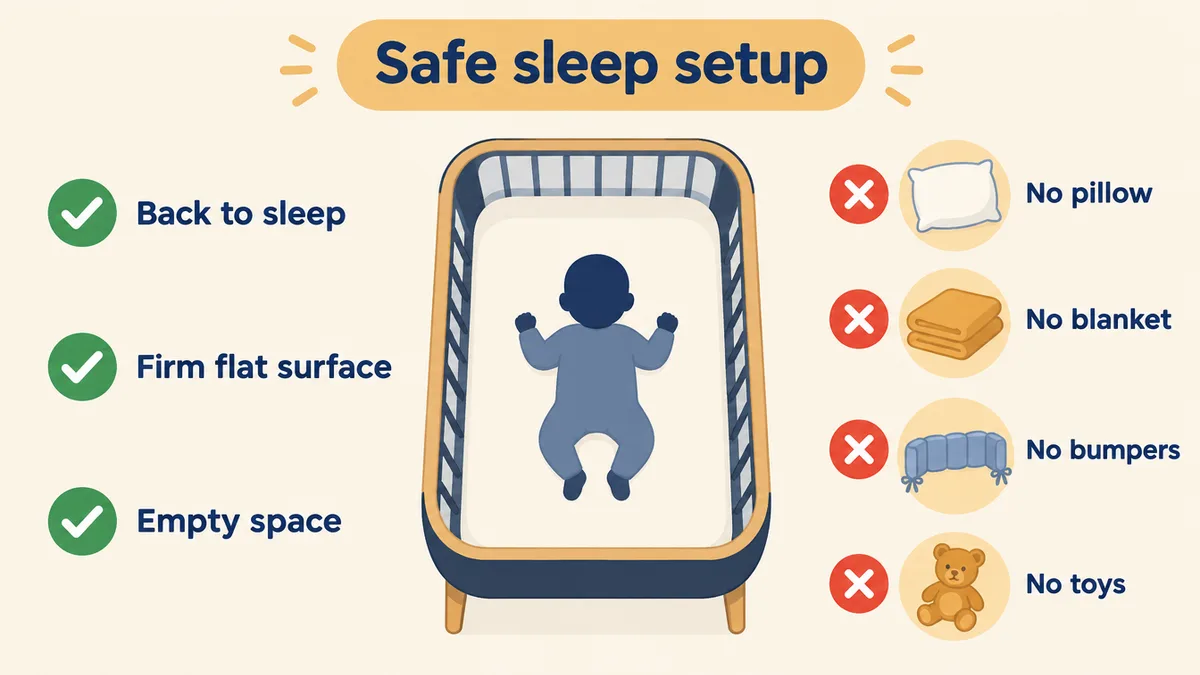
- Crib, bassinet or play yard that meets current safety standards
- Firm, flat mattress with a snug fitted sheet
- Nothing else inside: no pillows, blankets, bumpers or toys
- Placed in your room, close to your bed
- Not near cords, blinds or hanging items
- No inclined sleepers, positioners or loungers for sleep
- Wearable blanket or sleep sack ready
- Room temperature comfortable, not too warm
- Recall check done at CPSC.gov
Back, flat, firm, bare. Share the room, not the bed. See the full safe sleep checklist.
Days 1 to 7
One small list per day. Skip what does not fit.
| Day | Check off |
|---|---|
| Day 1 | Rest. Skin to skin. Ask nurses to show you feeding and diapering |
| Day 2 | Feed often. Note wet and dirty diapers. Ask questions before you leave |
| Day 3 | Milk may change. Watch diaper counts. Eat and drink |
| Day 4 | Book or confirm the first pediatrician visit |
| Day 5 | Try a short walk or fresh air if you feel up to it |
| Day 6 | Review the safe sleep checklist with every caregiver |
| Day 7 | Take a photo, write a note, accept one offer of help |
Days 8 to 14
You are finding your rhythm. Keep expectations small.
| Day | Check off |
|---|---|
| Day 8 | Note when baby seems sleepy and fussy during the day |
| Day 9 | Try a short stretch of tummy time while baby is awake and supervised |
| Day 10 | Hand off one night task to your partner or helper |
| Day 11 | Check on yourself: eating, sleeping when you can, feeling okay? |
| Day 12 | Write down your questions for the next visit |
| Day 13 | Do a small thing for you: shower, call a friend, sit outside |
| Day 14 | Look back. Celebrate. You made it through two weeks |
Some days will feel like a blur. Many families describe the first weeks that way.
Feeding and diapers
You do not need a spreadsheet, but a note of feeds and diapers helps your pediatrician. See newborn feeding and sleep log. Feed on cue. Ask your pediatrician how often to wake baby to feed and whether to wake overnight. See newborn sleeping a lot.
Sleep expectations
Newborns sleep a lot in short pieces, and day and night look the same at first. That is how newborns are built. Offer daylight by day, dim and quiet at night, and rest when baby rests. If you need to split nights, see newborn nights with a partner.
When to call the pediatrician
Keep this where every caregiver can see it. When in doubt, call.
Call your pediatrician right away if:
- Your baby is under 3 months and has a rectal temperature of 100.4°F (38°C) or higher, or a temperature below 97°F. Do not give fever medicine before talking to your pediatrician.
- Baby is not feeding well or refuses several feeds in a row.
- Fewer wet diapers than expected, or no wet diaper in 6 to 8 hours.
- Baby is very sleepy, hard to wake or limp.
- Yellow color of skin or eyes spreads or deepens.
- Vomiting that is forceful or green.
- Crying that cannot be soothed or sounds unusual.
- Redness, swelling or discharge at the umbilical cord.
- Anything that worries you.
Call 911 if baby is struggling to breathe, blue or gray, unresponsive or has a seizure.
Taking care of you
Recovery is part of the plan. Drink water at every feed, eat something with protein every few hours, rest when baby rests (even for 20 minutes), keep snacks in each room, accept help and say yes to meals. Schedule your postpartum check-up.
Call your doctor if you have heavy bleeding, fever, severe pain, foul-smelling discharge, a painful swollen leg or chest pain, and call 911 for trouble breathing or chest pain.
Many new parents feel weepy in the first two weeks. If sadness, anxiety or thoughts of harm last or grow, reach out. In the U.S. you can call or text 988 if you are in crisis.
Partner tasks and visitor rules
A written list makes it easy to say yes and easy to say no.
- One night shift so the feeding parent can sleep
- Diaper changes and burping
- Meals, dishes and laundry
- Update family and answer messages
- Groceries and prescriptions
- Driving to appointments
Visitor guidelines: wash hands before holding baby, no visitors who are sick, keep visits short, bring food or help with a chore, and hold baby only when the parents say it is okay.
Where to find more
The Newborn Sleep Playbook includes a 10-minute plan for tonight, a safe sleep chapter, a when-to-call list and a set of bonus guides covering the nursery setup, night shifts, helpers and your own recovery. A separate, paid First 2 Weeks Checklist with a day-by-day printable layout is sold as an add-on and is not part of the main product.