Newborn Sleeping a Lot: Is It Normal?
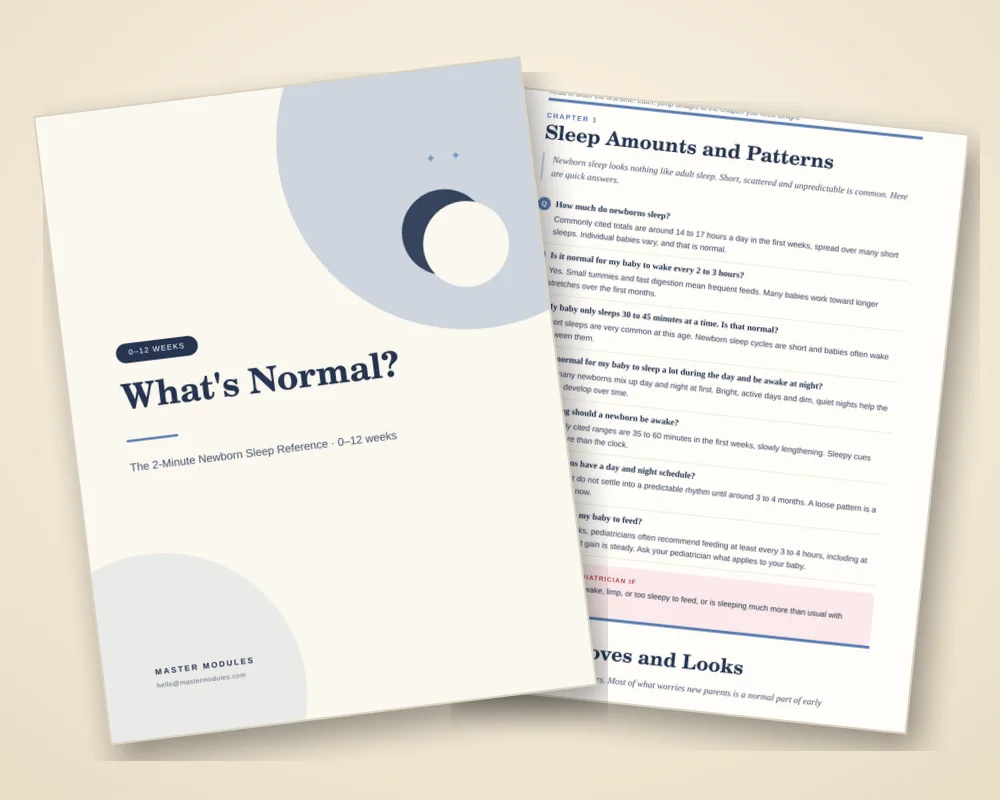
Yes, it is normal for a newborn to sleep a lot. Many newborns sleep roughly 14 to 17 hours in a 24-hour day, often in short pieces, and may spend more of the day asleep than awake. The key question is not how long baby sleeps but whether baby wakes to feed, has enough wet diapers and is alert and responsive when awake. This guide covers typical sleep, how to tell "sleepy but fine" from "needs a call," and what to log so your pediatrician can help.
What typical newborn sleep looks like
Commonly cited total sleep for newborns and young infants (approximate; every baby varies):
| Age | Typical total sleep in 24 hours | What it often looks like |
|---|---|---|
| 0–4 weeks | About 14–17 hours | Many short sleeps, frequent feeds around the clock |
| 1–2 months | About 14–16 hours | Slightly longer stretches may begin, especially one longer stretch at night |
| 2–3 months | About 14–16 hours | Day and night start to separate; naps may still be unpredictable |
These figures describe averages, drawn from sources such as the National Sleep Foundation and the American Academy of Pediatrics' HealthyChildren.org. A baby who sleeps a bit more or less may still be perfectly healthy.
Why newborns sleep so much
- Growing is hard work. Newborns grow fast and sleep supports that.
- No body clock yet. Newborns do not have a mature day-and-night rhythm. They spend months building one, so sleep is spread across the day and night.
- Short cycles. Newborn sleep cycles are brief, so "a lot of sleep" often means many short naps.
- Tiny stomachs. They wake to eat often, then drift back off.
"My baby sleeps all day" can still be normal
Some babies are sleepier than others. Ask your pediatrician what is expected for your baby. A sleepy baby is usually fine if:
- Baby wakes for feeds, or wakes easily when you wake them to feed.
- Baby feeds well and wakes up a little during feeds.
- Baby has the number of wet diapers your pediatrician told you to expect.
- Baby is calm and alert for short stretches when awake.
- Baby is gaining weight as your pediatrician expects.
Waking a newborn to feed
In the first weeks, a baby who sleeps for long stretches may need to be woken to eat. Pediatricians commonly give guidance on this, especially until birth weight is regained. Because every baby is different, ask your pediatrician how often to wake your baby and whether to wake overnight.
Ways to wake a sleepy baby gently:
- Unwrap blankets or the swaddle and bring baby to a lit room.
- Hold baby upright and talk or sing softly.
- Change the diaper.
- Stroke the cheek or rub the back.
- Skin to skin helps many babies stay awake to feed.
Signs it is time to call
Sleeping a lot is a reason to call when it comes with other signs. Call your pediatrician right away if:
- Baby is very hard to wake or seems floppy or limp.
- Baby is feeding poorly or refusing several feeds in a row.
- Baby has fewer wet diapers than expected, or no wet diaper in 6 to 8 hours.
- Baby has a rectal temperature of 100.4°F (38°C) or higher. A newborn with a fever needs medical attention right away.
- Baby's skin or eyes look more yellow.
- Baby has fast, noisy or labored breathing.
Call 911 or go to the ER if baby is struggling to breathe, has blue or gray skin or lips, is unresponsive, or you cannot wake them. When in doubt, call.
Is sleeping a lot safe sleep?
Long sleeps are only safe if the space is. The AAP recommends back sleeping on a firm, flat surface, with a fitted sheet and nothing else, in your room but not your bed. That applies to every nap and every night. See the safe sleep nursery setup for a checklist.
What to track for your pediatrician
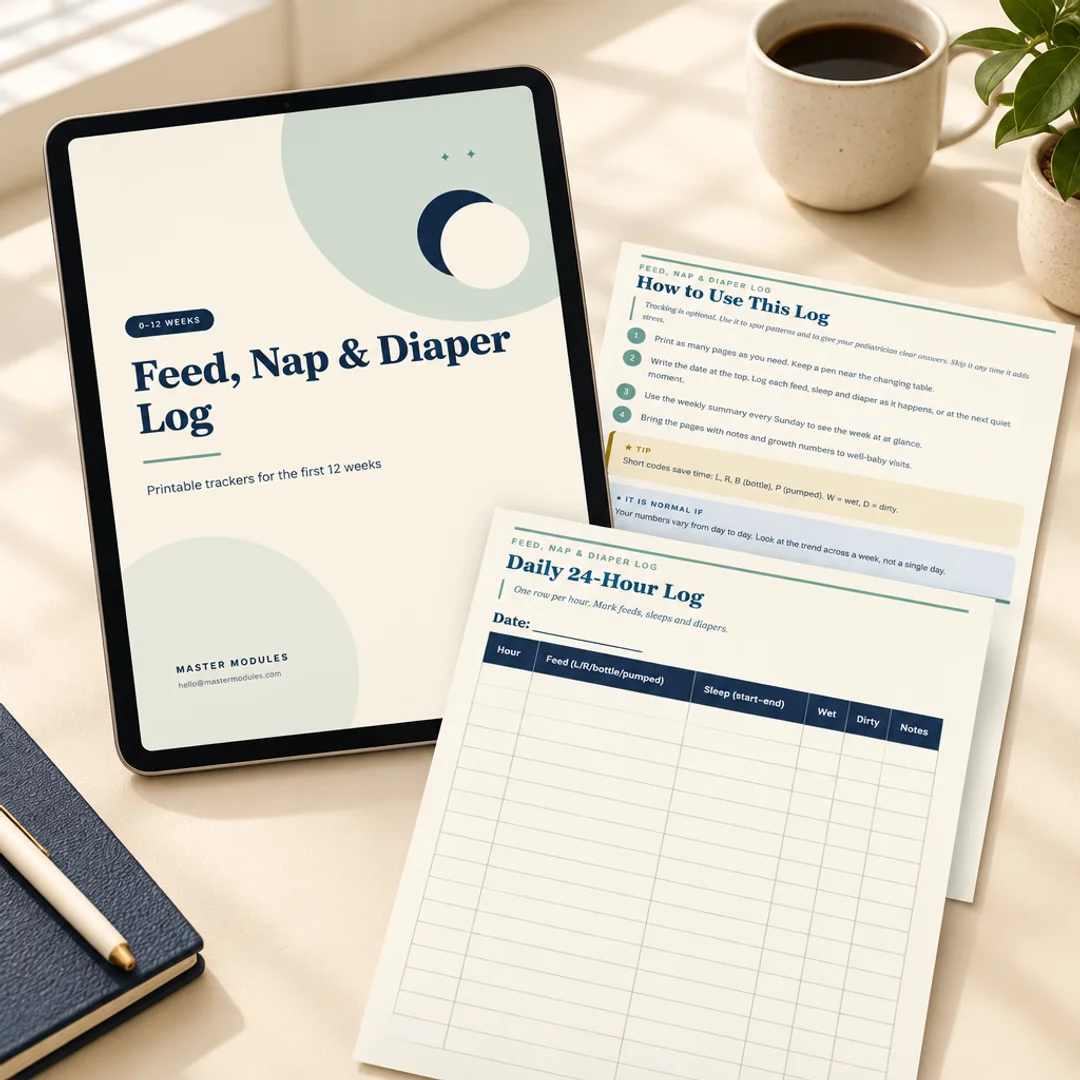
A simple note on your phone is enough. Write down feeds, wet and dirty diapers, and when baby sleeps and wakes. Look at the trend across a week, not a single day. A printable layout is described in newborn feeding and sleep log.
When sleep changes
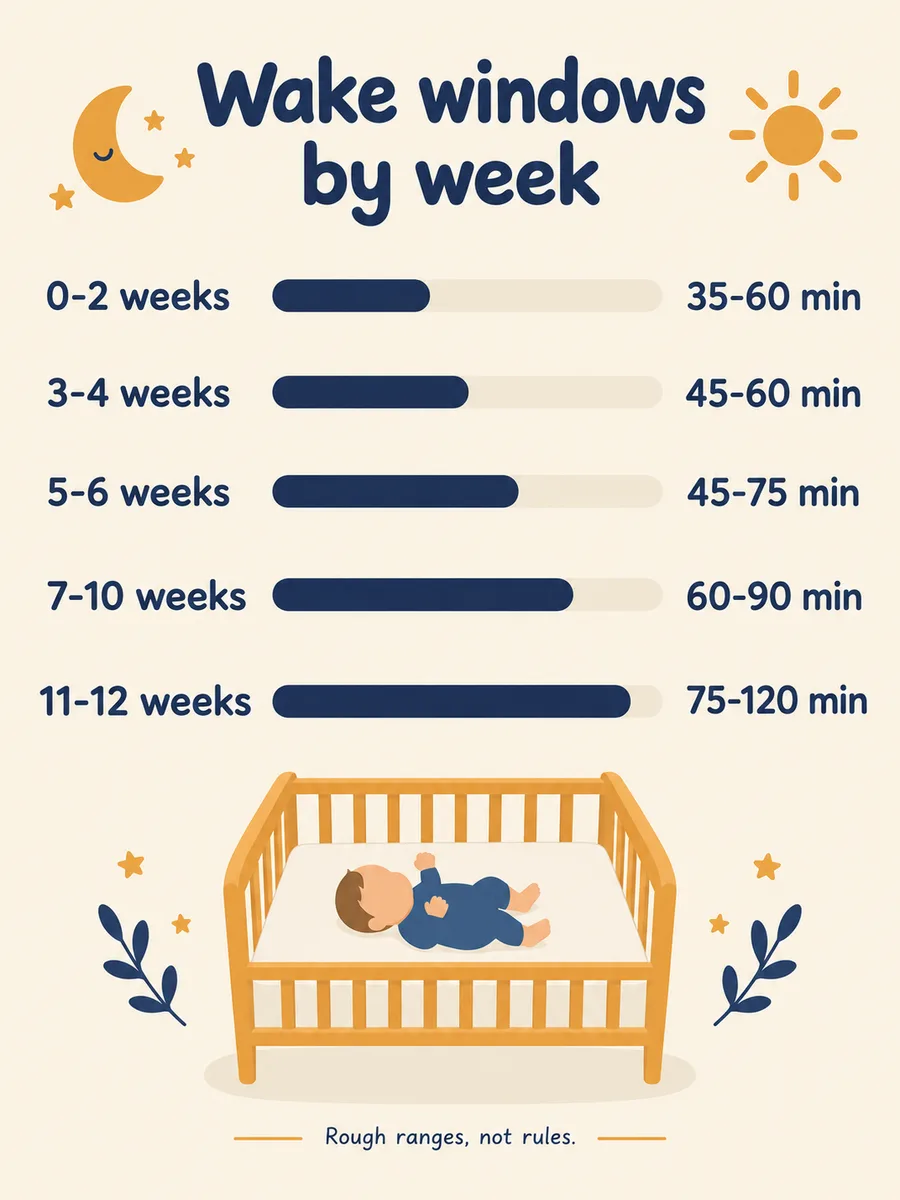
Sleep changes as babies grow. Around growth spurts, babies may sleep more for a day or two and then feed much more. See newborn growth spurts and fussy weeks. From about 2 to 3 months, day and night start to separate, and awake windows get longer. See newborn wake windows by week for commonly cited ranges.
Common questions parents ask
Does a sleepy newborn mean a "good" baby? Not necessarily, and not a bad one either. Sleepiness varies. What matters is feeding, diapers, alertness and weight gain.
Should I let a sleeping newborn sleep through the night? In the first weeks, not without checking with your pediatrician. Many pediatricians suggest waking a baby to feed if they sleep too long, especially until birth weight is regained. Ask what is right for your baby, because the answer depends on weight gain.
Do I need to keep a strict schedule? No. A flexible rhythm is enough: feed when baby wakes or shows hunger cues, a little awake time, then sleep again. Many newborns repeat this 8 to 12 times a day.
What if my baby suddenly sleeps much more than usual? A change from baby's usual pattern, especially with poor feeding, fewer wet diapers, fever or hard-to-wake sleep, is a reason to call your pediatrician. A day or two of extra sleep during a growth spurt can happen, but call if you are unsure.
More help
If you want a plain-language reference you can keep on your phone, The Newborn Sleep Playbook includes a chapter on what is normal in weeks 0 to 12, a list of when to call your pediatrician, and a bonus quick guide of 101 newborn sleep answers. It is educational and does not replace your pediatrician's advice.